Each engagement draws on the same body of work — applied differently depending on where the pressure is.
Most leadership development asks the wrong question. It focuses on what leaders do — the behaviours, the frameworks, the checklists. The Leadership Maturity Assessment asks something harder: what conditions have you actually created? The 32-question self-assessment cuts through self-perception to map your real leadership terrain across four domains.
The TRIM framework — Trust, Relationships, Intelligence, Meaning — was developed from two decades of work inside high-stakes organisations. Each domain names something that cannot be delegated and cannot be faked. Together they describe the load-bearing structure of any team that performs under pressure. The assessment scores you against all four.
Your result is a maturity band report: a direct read on where your leadership holds and where the gaps are costing you. Not a personality profile. Not a trait inventory. A diagnostic with a clear next step — because knowing what is missing is the only useful starting point.
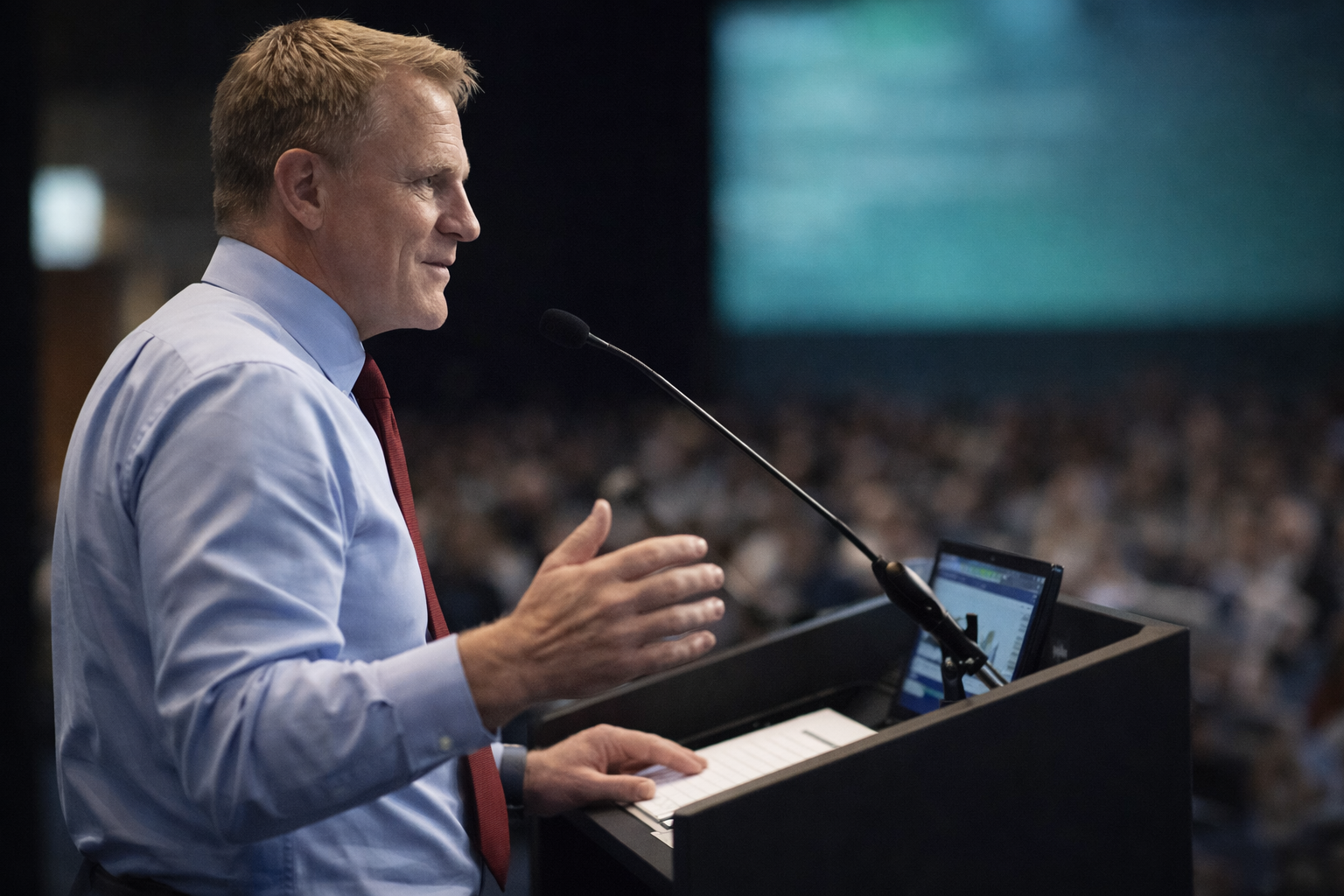
The Simplexity Framework is not a management model. It is a methodology built for the systems that refuse to behave — where cause and effect are separated in time, where the obvious intervention makes things worse, and where most consultants retreat to the familiar. Paul developed Simplexity over twenty years working directly inside those systems.
The applied methodology draws on complexity science, Cynefin, and systems thinking — tested across banking, military, elite sport, and government. It has been stress-tested in environments where failure is visible and the consequences are real. That is where it was built, and that is where it performs.
Consulting engagements range from structured workshops to embedded advisory programmes. Every engagement begins with the same diagnostic question: what is the system actually doing, as opposed to what you think it is doing? The Simplexity Framework gives you the tools to answer that — and to act on what you find.
High performance is not a talent problem. The teams that collapse under pressure are rarely under-skilled — they are under-structured. The HPT delivery model targets the thinking quality of the team: not what people know, but how the team thinks together when the stakes are high and the picture is unclear.
The difference between a high-performing team and an average one is not the individuals. It is the relational and cognitive architecture between them — the patterns of trust, the quality of meaning-making, the capacity to hold disagreement without losing coherence. That architecture can be built. It requires diagnosis before prescription, and the HPT programme starts there.
The programme runs as a structured diagnostic followed by a series of facilitated interventions designed around what the team's data actually reveals. No off-the-shelf modules. No team-building days. A targeted programme calibrated to the real gaps — delivered by someone who has worked in the same pressure environments the team is operating in.